
How Does Sugar Defender Work? Formula & Ingredient Evidence Explained
Sugar Defender combines chromium with a 200 mg proprietary blend. Here is how to interpret the formula without overstating what the evidence can prove.
Independent affiliate website. Current commercial terms should be verified before purchasing.
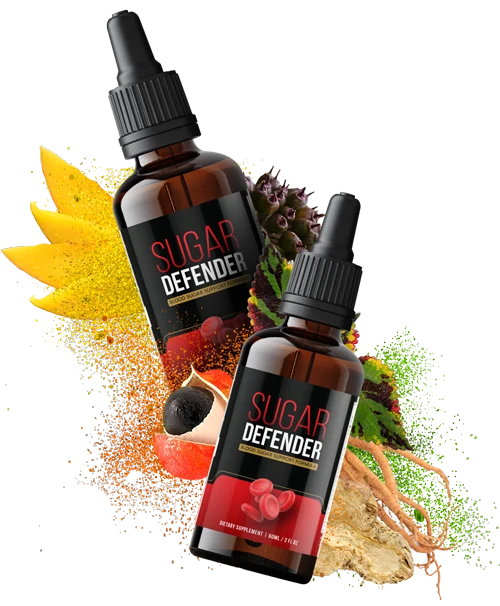
How the formula is positioned
The bottle label calls Sugar Defender a “Blood Sugar Support Formula.” The current marketing materials also spotlight botanicals such as gymnema, ginseng, guarana, maca and others. Those are promotional positioning statements—not proof that the finished product has been clinically shown to lower blood glucose or treat diabetes.
From an evidence perspective, a multi-ingredient product can only be judged as a finished formula if there is direct clinical research on that exact formulation, at the labeled dose, in an appropriate study population.
Three layers of evidence
Product-label facts
High confidence for what is printed: serving size, named ingredients, label directions and warnings.
Ingredient research
Useful for understanding what researchers have studied, but results depend on extract, dose, duration and participants.
Finished-product trials
Would be needed to establish product-specific efficacy. Ingredient studies cannot be substituted for this layer.
Why the proprietary blend matters
The label gives a combined 200 mg for the proprietary blend but not individual ingredient amounts. This prevents dose matching. For example, if a study used a specific amount of gymnema or ginseng, we cannot assume Sugar Defender contains the same amount.
That is why this site uses phrases such as “included in the formula” and “studied independently” rather than “clinically proven ingredient at a clinical dose.”
Why a mechanism story is not enough
Supplement marketing frequently builds a “how it works” story by selecting one mechanism from each ingredient. For example, one ingredient may be associated with caffeine, another with insulin-related research and another with antioxidant activity. Combining those mechanisms into a diagram can look scientific, but it does not demonstrate the net effect of the finished formula in humans.
Mechanistic plausibility is only one layer of evidence. Absorption, dose, ingredient interactions, adherence, baseline health and the actual endpoint being measured all affect whether a proposed mechanism translates into a meaningful clinical result.
What direct product evidence would look like
A stronger evidence base would include a randomized, controlled study of the exact Sugar Defender formulation at the labeled 1 mL dose, with a clearly defined population, prespecified outcomes and transparent reporting. Ideally, the trial would also describe the full formulation and funding source. We did not identify such a trial in the materials used for this build.
What ingredient studies are still useful for
Ingredient research can identify safety concerns, interaction questions and areas of biological interest. It can also help explain why a formulator might choose a particular ingredient. The correct use of that evidence is contextual—not a shortcut to declaring the entire blend clinically proven.