
Sugar Defender Ingredients: Full Formula & Label Explained
The current label contains chromium plus a 200 mg proprietary blend with botanicals and amino-acid-related ingredients. Here is the label-first breakdown.
Independent affiliate website. Current commercial terms should be verified before purchasing.
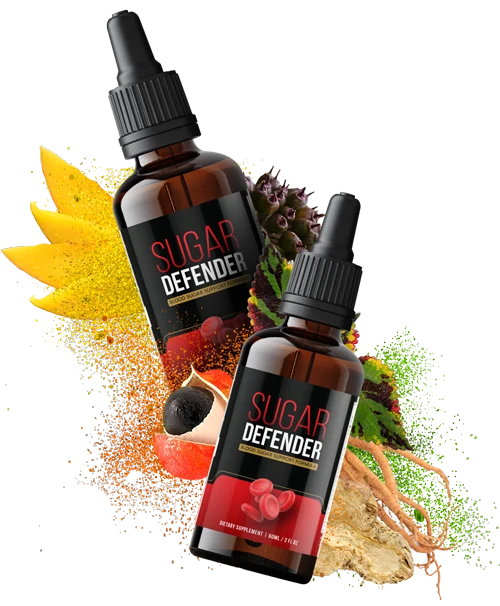
What the current Supplement Facts panel shows
The supplied current label lists chromium (as chromium picolinate) at 0.7 mcg, 2% Daily Value, followed by a 200 mg proprietary herbal blend. The individual amounts of the ingredients inside that blend are not disclosed.
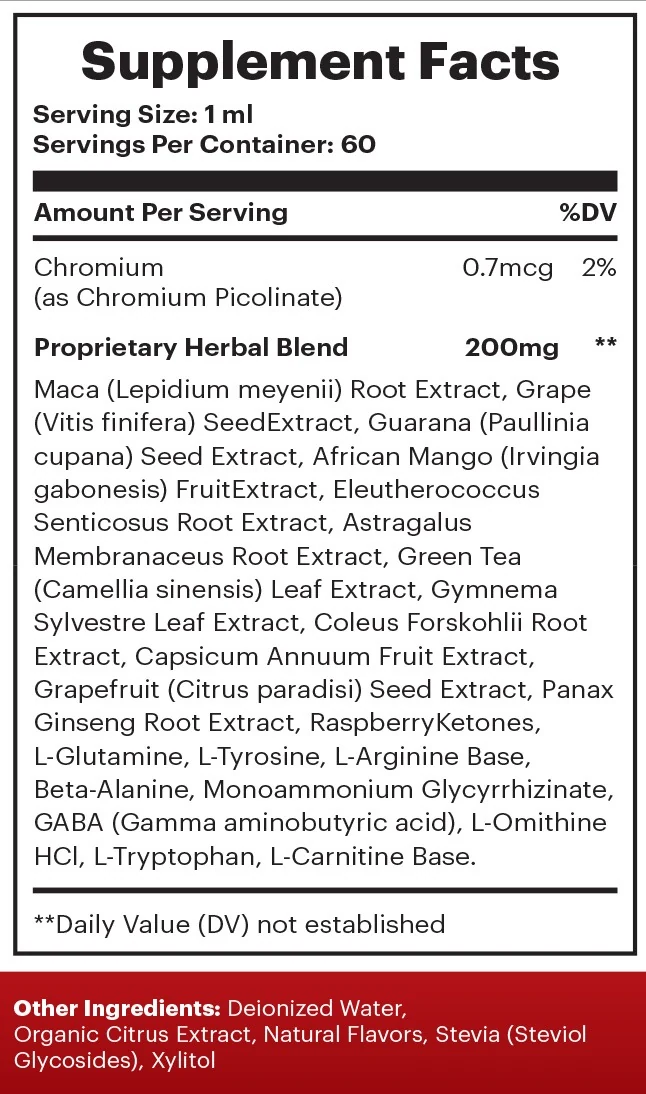
Complete proprietary blend list
- Maca (Lepidium meyenii) root extract
- Grape (Vitis vinifera) seed extract
- Guarana (Paullinia cupana) seed extract
- African mango (Irvingia gabonensis) fruit extract
- Eleutherococcus senticosus root extract
- Astragalus membranaceus root extract
- Green tea (Camellia sinensis) leaf extract
- Gymnema sylvestre leaf extract
- Coleus forskohlii root extract
- Capsicum annuum fruit extract
- Grapefruit (Citrus paradisi) seed extract
- Panax ginseng root extract
- Raspberry ketones
- L-glutamine
- L-tyrosine
- L-arginine base
- Beta-alanine
- Monoammonium glycyrrhizinate
- GABA (gamma aminobutyric acid)
- L-ornithine HCl
- L-tryptophan
- L-carnitine base
Other ingredients
Deionized water, Organic citrus extract, Natural flavors, Stevia (steviol glycosides), Xylitol.
Ingredient research: how we interpret it
1. Confirm label presence
We first confirm that the ingredient actually appears on the current label rather than relying on promotional highlight lists.
2. Review independent evidence
We prefer NIH, NCCIH, PubMed and other authoritative sources. Evidence quality, population and dose are considered.
3. Do not transfer proof
A study on isolated chromium, gymnema or ginseng does not prove that the finished Sugar Defender blend has the same effect.
Major ingredient evidence guides
How the formula can be grouped
The current blend combines botanicals, amino acids and amino-acid-related compounds in one 200 mg proprietary blend. Grouping them by type can make the label easier to understand, but the grouping does not imply that ingredients within a category have the same evidence or function.
Botanical extracts
Maca, grape seed, guarana, African mango, eleuthero, astragalus, green tea, gymnema, coleus, capsicum, grapefruit seed and Panax ginseng.
Amino acids and related ingredients
L-glutamine, L-tyrosine, L-arginine, beta-alanine, GABA, L-ornithine HCl, L-tryptophan and L-carnitine.
Other blend component
Raspberry ketones and monoammonium glycyrrhizinate are also listed inside the proprietary blend.
Ingredients that deserve extra context
Guarana is relevant because it naturally contains caffeine, yet the label does not state the product’s caffeine amount. Panax ginseng has medication-interaction questions documented by NCCIH. Grapefruit seed extract should not be confused automatically with grapefruit juice; interaction risk depends on composition and has not been quantified for this formula. Green tea extract can differ substantially in catechin and caffeine content depending on standardization, which is not shown on this label.
These examples illustrate why a long ingredient list is not equivalent to a transparent dose table. The more ingredients placed inside a small total proprietary blend, the more important it becomes to avoid assuming research-level doses.